Head of Russia’s largest publishing group says employees who resisted new censorship rules were fired


The head of the company behind Russia's largest publishing house has said the company fired employees who were unwilling to comply with tightened internal censorship procedures introduced after a criminal case targeted its subsidiaries, according to the independent outlet Agentstvo Media.
“We had to revise many internal regulations, instructions, and procedures for accountability,” Eksmo-AST President Oleg Novikov said in a recent interview with state media. “Some people were unable to work under these conditions. We have employees who resigned. Others we dismissed ourselves, because the person was not prepared — or, one could even say, did not want — to comply with the requirements that the law now imposes.”
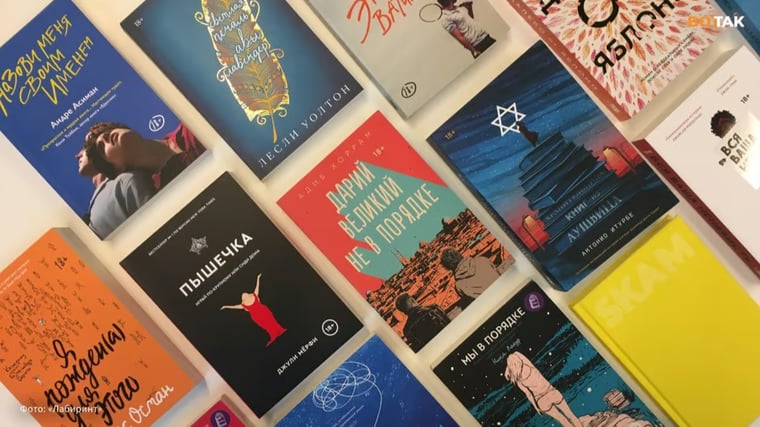
Novikov said the company “drew all the necessary conclusions” and “seriously tightened” its internal review procedures in the wake of the so-called publishers' case, in which employees of Eksmo-AST subsidiaries were criminally charged this year with “LGBT propaganda” and involvement in an “extremist organisation”.
Books published by the company are now checked against 10 criteria before release, Novikov said, including whether they depict “non-traditional relationships”, “propagandise” drug use, or otherwise run afoul of various legal bans. Because of the new legal requirements, he added, Eksmo-AST has had to review not only books currently in production but its entire backlist — “the books created over the 20 years the publishing house has existed”.
To vet its books, Eksmo-AST uses artificial intelligence. Novikov said neural networks were used to scan almost all manuscripts, with the algorithm flagging pages for editors that need extra attention. “In total, about 20,000 internal reviews were carried out. 600 books were sent to outside experts for additional review,” he said.
Eksmo, part of the Eksmo-AST group, had already reported in April that it conducted 5,000 internal reviews and 500 external checks of its books. The publisher's press office said at the time that books are screened against more than 10 criteria, “including extremism, foreign agents, LGBT content, pedophilia, discrediting the Russian army, and so on”. Violations turned up in non-fiction as well, the publisher said: descriptions of “non-traditional relationships”, for example, could appear in medical literature and biology textbooks, as well as in photographs and people's biographies.