‘There’s simply no other way’

A 29-year-old is the new face of Russia’s grassroots opposition. Here's how he plans to fight authoritarianism from the inside

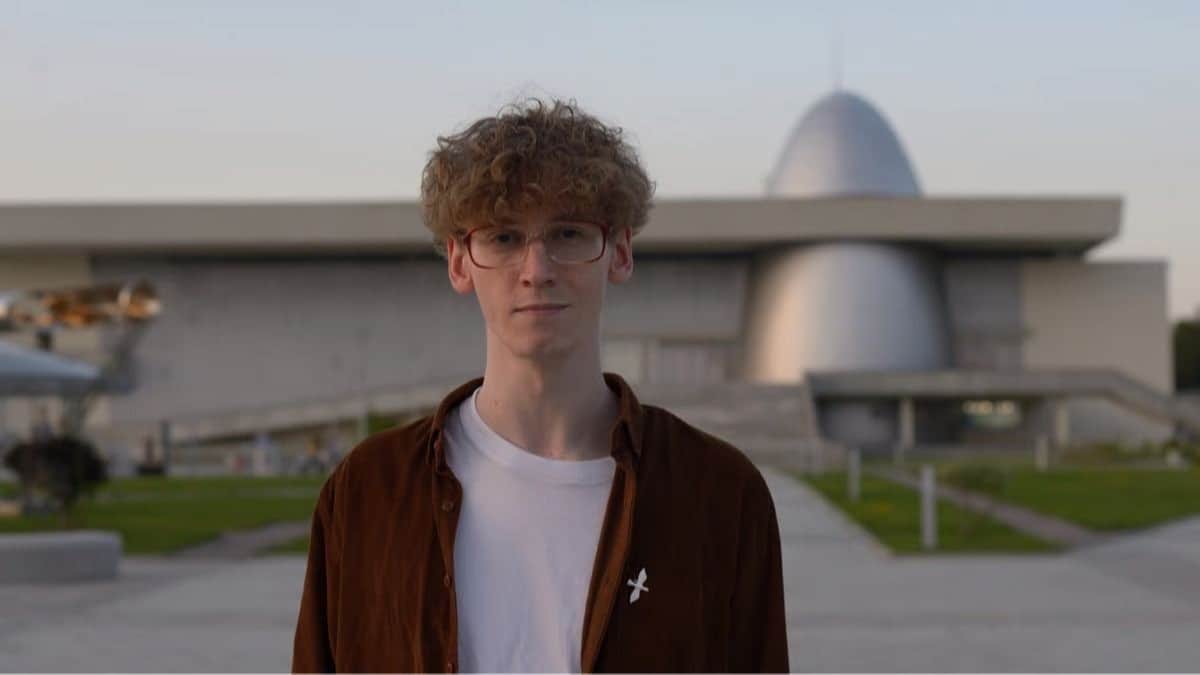
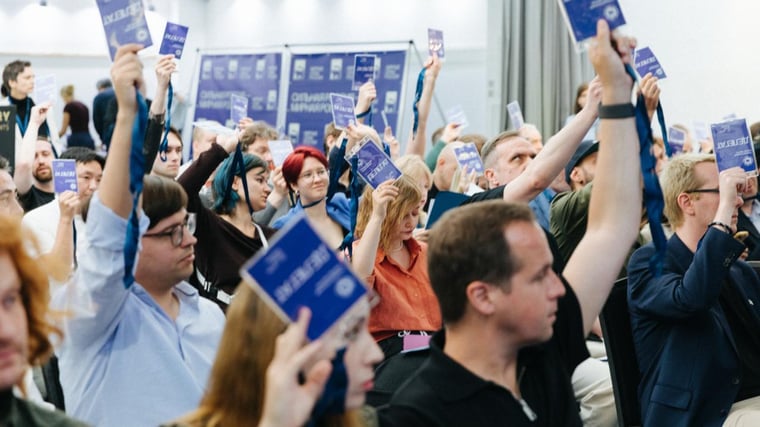
Konstantin Larionov looks younger than his 29 years, but his ambitions run high. During Russia's 2024 presidential campaign, he volunteered for Boris Nadezhdin, the race's only openly anti-war candidate, who was ultimately barred from running. Today, Larionov leads Candidates' Headquarters, an interregional civic and political organisation that grew out of the Nadezhdin campaign. The group is currently preparing for Russia's upcoming elections, serving as a hub for independent election monitors and commission members. On social media, Larionov documents what grassroots politics looks like in Russia today.

In late April, Larionov announced that he would run for the State Duma as an independent. He has pledged to fight internet censorship, corruption, electoral fraud, and the poor state of urban sanitation. To understand what a new generation of Russian politics looks like up close, the independent media outlet Veter spoke to Larionov. Novaya Gazeta Europe shares an abridged translation of that conversation.

— Do you remember how old you were when you first became interested in politics?

— Honestly, I never wanted to go into politics. I studied to be a history and civics teacher, and it took real effort to find a job in my field. And as it turned out, that’s where I started advocating for the rights of people working in education.

For that work, I was earning a grand total of 11,000 rubles a month [€125]. This was 2019. And they were trying to cut that even further — reduce my hours, reduce my pay. Of course, I decided I wanted to fight for my labour rights. That’s what I’d been taught: there’s an employment contract, there are standards, there’s an education law. And then I saw that none of it was being followed. How could that be?

— But there’s quite a difference between that kind of personal fight for your rights and actually running for office. How did that idea come to you? In today’s political climate, it’s a bold one.

— How bold is it, really? There are plenty of people across the country doing valuable activism. Some print leaflets, some try to organise rallies, others show up for solo pickets. Given the political situation we’re in right now, I think it’s simply impossible to stay out of politics. You go to vote and there’s no candidate you actually want to vote for. Or you work in the public sector and you’re pressured to vote electronically, with no way to verify your own vote afterward. Or it’s something even more mundane: you’re heading to work, or you’re exhausted on the way home, and you put in your earbuds and turn on a great song — only to find out [state censorship agency] Roskomnadzor has cut words out of it.

You can pretend none of this is happening. You can hand over your rights and freedoms entirely to a machine that just keeps rolling forward, flattening them one by one. Or you can try to do something about it. Even if sometimes it’s just action for action’s sake — just to have something, some form of activity, some effort to fight for sanity in your own corner of the world rather than sitting on your hands.

— How do you respond to the objection that right now, private projects are both safer and more practical than running for office? And how did your family react to the idea of you running?

— Let me answer you in reverse order. My family and friends are completely behind me. Since 2022, I’ve met a lot of activists and acquaintances who’d had real rifts with their parents over politics. I’ve been lucky in that realm. My parents, my close friends, and the people around me all support what I’m doing. That genuinely makes the work easier. 

A year ago I tried to run for Kaluga City Duma. I ultimately wasn’t allowed on the ballot, though that’s a separate story. I was going door to door asking people: do you support United Russia? The local authorities? I asked ordinary people — young, old, anyone. Did a single person say yes? Not one. Zero. And it made me think: give us even a small chance and we’d get through. And not just us — the same is true at every level: city council, regional legislature, and beyond.

— How do you plan to run your campaign? Am I right that you want to run in a single-member district as an independent?: That’s harder than going through a party, isn’t it?

— Running on a party list is definitely easier, and I won’t pretend those conversations aren’t happening with people I know. But there’s no point discussing it until something concrete materializes. If I go as an independent, that means gathering 24,000 signatures — an enormous number. On top of that, Kaluga region just reduced the number of districts from two to one.

But we have lawyers, we have activists, and we have real experience collecting signatures from the Nadezhdin campaign. A huge pool of specialists stayed on with us. Our analysts are simply the best.

So the main constraint is financial. If the election route works out, then we file, we collect signatures, we do everything possible to win. If it doesn’t, there are projects on my website that we’ve been running and will keep running regardless. Ultimately, we’re using this campaign as a platform to speak more loudly about what’s wrong in this country.

And we have also one more project in the works. It will probably sound familiar [i.e. similar to the late opposition leader Alexey Navalny’s Smart Voting initiative]. We’re calling it “protest voting”! We’ll be campaigning for the second-strongest candidate.

Call it whatever you like, but it’s a proven strategy, one that’s been tried and has worked in other countries too. In Turkey, for instance, that’s more or less how the mayor of Istanbul won, if I’m not mistaken. So one way or another, we’ll find a way to fight for our rights — whether through the State Duma election or through other projects.

— Imagine the best case scenario: everything works out, you’re elected, and the first day of the new Duma session arrives. What are your first steps toward fulfilling your campaign promises?

— First of all, we'd celebrate — properly. And then the very next day, we'd get to work without fail. What to tackle first is an interesting question. Honestly, there are so many problems in this country that I simply don't know where to grab hold. Probably the top priority would be fighting for rights and freedoms regarding internet censorship. Or the situation closely related to that one, in which people apply for rally permits and get turned down every single time. On top of that, there's an urgent need to push for abolishing electronic voting. We'd work through everything gradually.

— What do you think about the war? Where is all this heading? And do you plan to speak about it publicly?

— We operate within our means and our weight class, so to speak. For now we're a small organisation and we don't touch that topic at all, simply because it's dangerous. That's not the level at which we're capable of making Russia better. We simply don't have the resources for it. Of course, if I were elected as a deputy, that would already mean a somewhat different set of resources and a different platform. So we'll see how it goes.

— Are you scared?

— You know, sometimes in the winter you stand there thinking: should I go to the shop or not? The roofs aren’t cleared properly, there are huge icicles, something could fall on your head. But you go anyway, you pick up some bread, some sausage, you make yourself a sandwich. Because that’s just life. We’re not only defending the rights of some particular group of Russians — we’re defending everyone’s rights, including the police officers themselves. I’m convinced they don’t like internet censorship any more than the rest of us. Yes, we understand the risks. But there’s simply no other way. You can try to look away from politics — but what do you do when politics has already looked straight at you?

Interview: Andrey Karpinsky
Share
Topics